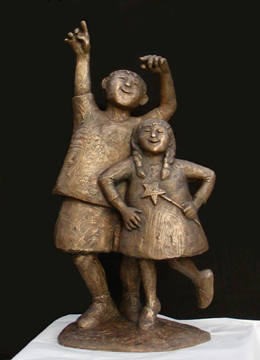
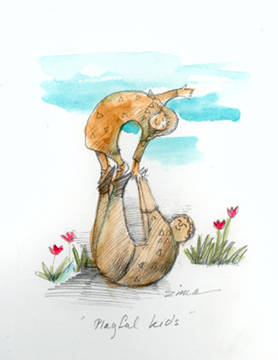
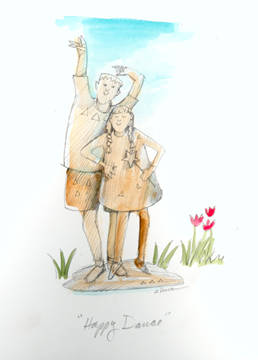
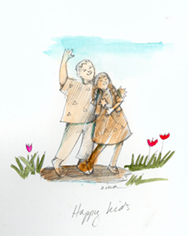
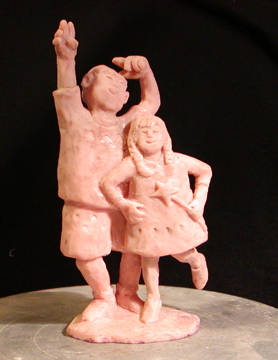
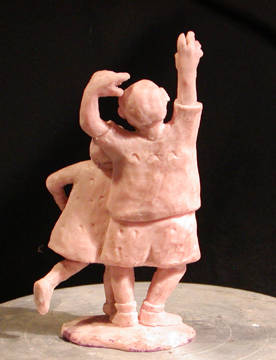
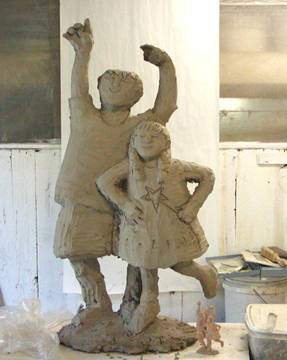
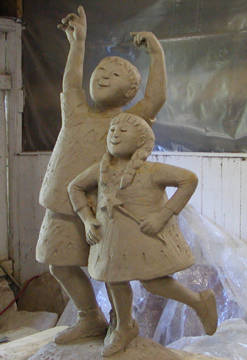
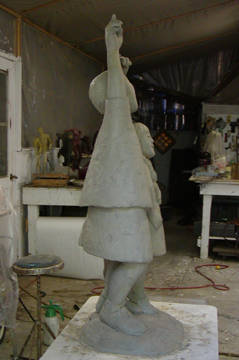
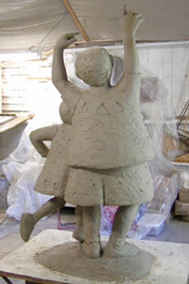
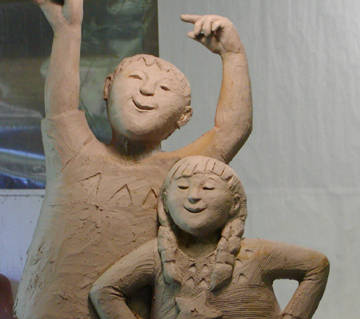
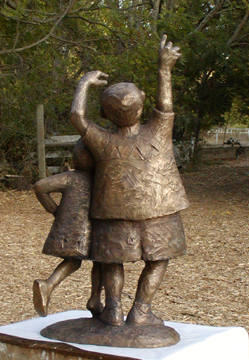
The following photos show the process of creating “happy dance.” A family reached out to Paula with a request for a sculpture that would capture the spirit and energy of their two lively children. Rather than a realistic depiction, they were seeking something more expressive and imaginative. They shared photos along with thoughtful descriptions that revealed each child’s unique personality. Using this inspiration, Paula created a series of sketches for the family to consider. After reviewing the options, they selected one, offered a few suggestions, and the project was set in motion.
The initial step involved creating a small ‘maquette’—a quick, preliminary sculpture approximately five inches tall. Since the family resides out of state, photos were shared with them for feedback. They were pleased with the result and gave their approval to proceed with the project.
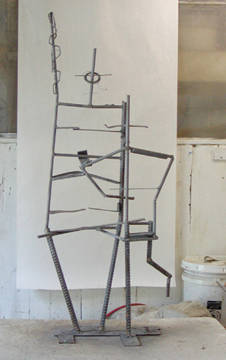
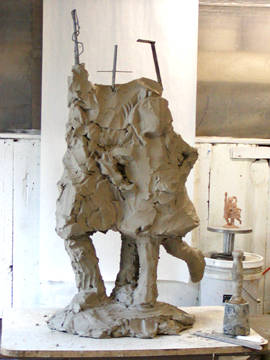
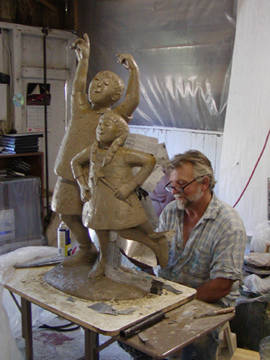
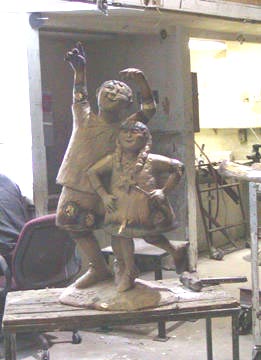
These photos show the steel armature that helps support the heavy weight of the clay. Paula often works with water-based WED clay for her sculptures, and this one came in at around 150 pounds. She starts by slapping the clay on quickly to block out the basic shape, and then slowly begins refining the details as the piece comes to life.
As the smaller detail is considered, the work slows down. It could take weeks to get to the final stage. Sometimes a piece has to wait, carefully wrapped in plastic to keep the clay moist, until the time is right, and the next step reveals itself.
When the clay work is finished, photos are taken so the family can see the sculptures’ progress and be sure they are happy with how it is coming along.
The next step is to create a mold of the clay sculpture. Sometimes the mold is made right in the sculpture studio, or it can be taken to the foundry, which will do the entire process.
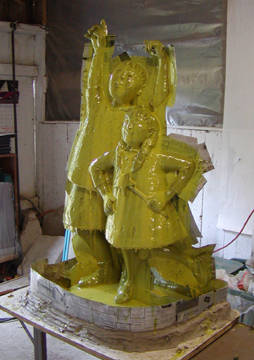
First, a thin metal dam is placed along the parting line, where the mold’s edges will come together. Then the first layer of mold rubber is brushed on. It is layered several times until it reaches just the right thickness.
When the rubber mold reaches a thickness of about 1–2 inches, a supportive “mother mold” is applied, typically made of plaster or fiberglass.
The mother mold is added while the rubber is still on the original clay sculpture, to ensure it holds the mold in the exact shape of the original. Its purpose is to provide a rigid backing that preserves the form and detail of the flexible rubber layer.
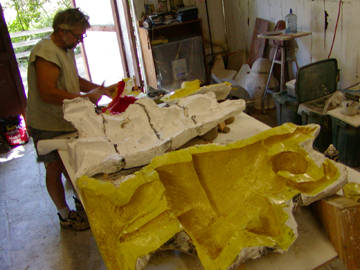
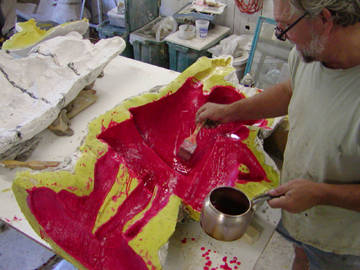
In the photo, you can see the rubber mold for the back half of the sculpture resting on the table, supported by its mother mold. The white section shown is the mother mold for the front of the sculpture.
The next step is to brush or pour a layer of wax into the mold, building it up to about ¼ inch thick as evenly as possible. This wax layer determines the final thickness of the bronze, since the sculpture will be hollow, the bronze will match the thickness of the wax
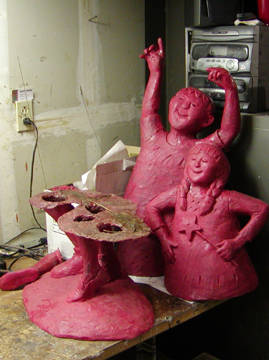
After the wax cools, it is removed from the molds, and all parts are seamed together. Now you have a hollow, ¼” thick, wax replica of the original sculpture. This has to be cleaned up to remove any imperfections that may have occurred in the process.
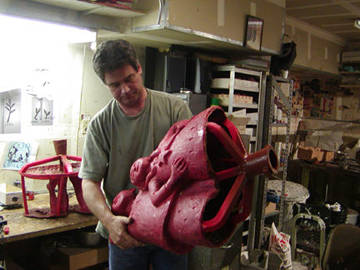
Here you see the wax sprues, which are used to hold the wax sculpture in position; they will also become the channels for the bronze to be poured down, and vents for the air to escape from. The arms have been removed and will be cast separately, as will the legs, and base, and the girl’s leg that was kicking out to the side.
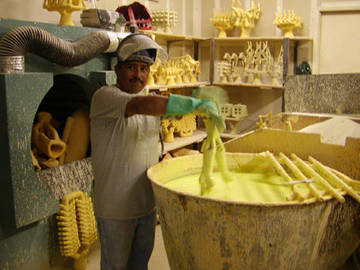
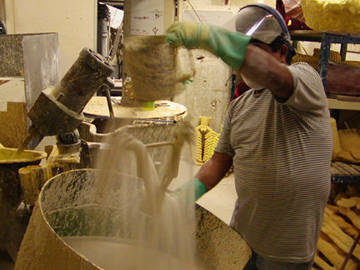
The photos below show the wax arms of the boy being carefully dipped into the slurry to be sure that it is completely covered inside and out. Next, while the slurry is still wet, it is coated with a silicon sand.
All the individual pieces will then be put up on a shelf to dry. The process will usually happen two more times, until a strong, thick shell is built up.
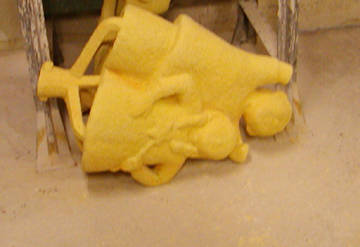
Here is the main part of the sculpture with its finished, fully dried shell, which is a bright yellow color.
Once the shell is completely dry, it’s placed in a large kiln. The intense heat causes the shell to turn white and melts the wax inside. The wax flows out through the sprues and is entirely burned away, leaving a hollow mold ready for casting.
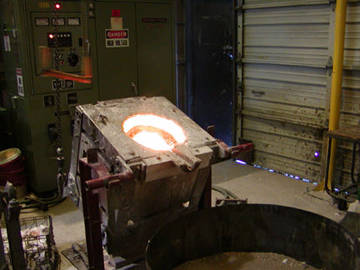
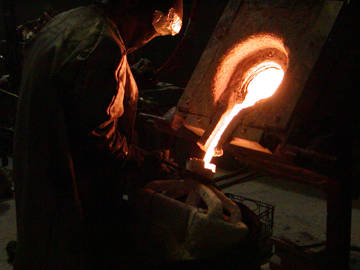
This is typical of the furnace where the bronze bars are being melted, soon to be poured into the waiting shell.
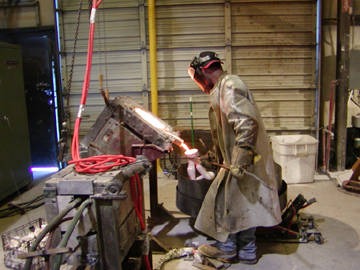
The bronze is being poured out of the crucible, into one of the smaller shells.
This is an exciting time at the foundry. The roar of the furnace, the possible danger. Some foundries do this with a large audience, music, and great splashing of the fiery molten bronze. Other foundries do it quietly and precisely, with no extra drama. Either way, it is compelling to watch.
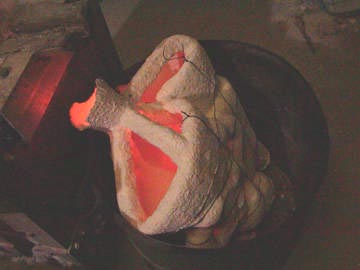
This shows the molten bronze being poured into the larger shell of the main part of the sculpture.
Here you can see the bronze, just after it was poured into the shell. It looks bright red, like the skin of a persimmon, but it is molten bronze. It will have to cool for a while to become solid, then the shell will be broken away.
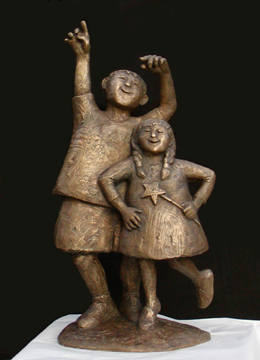
After all of the parts have been cast, cooled, and the shells broken off, they are welded together. Now, you have a bronze casting of the original clay sculpture.
The bronze is the same thickness as the red wax that was brushed into the rubber mold.
The sculpture is hollow, but may weigh 50-100 or more pounds. Large stainless steel bolts are welded to the underside of the base for mounting to a concrete base.
The next step is to carefully grind and polish away any imperfections left by the welding process, and to restore any surface texture that may have been lost along the seams.
Once the artist is satisfied with the details, a chemical patina is applied to the raw bronze. In this case, a simple outdoor patina was chosen to give the sculpture a naturally aged appearance.
To protect the finish, a coat of paste wax is applied.
The final step is to build a custom crate and ship “happy dance” to its new home. The sculpture was commissioned as a joyful tribute to the family’s two beloved—and quickly growing—children. At the family’s request, the title remains in lowercase, in honor of their admiration for e.e. cummings and his playful, unconventional spirit.